


In the ever - evolving landscape of manufacturing technology, the concept of remote control has emerged as a game - changer. As a supplier of 4 Station Thermoforming Machines, I often encounter inquiries about whether these machines can be remotely controlled. This blog post aims to delve into this topic, exploring the feasibility, benefits, challenges, and future prospects of remotely controlling a 4 Station Thermoforming Machine.
Feasibility of Remote Control
The short answer is yes, a 4 Station Thermoforming Machine can be remotely controlled. With the advancements in Internet of Things (IoT) technology, industrial equipment is becoming increasingly connected. A 4 Station Thermoforming Machine, which typically involves multiple processes such as heating, forming, trimming, and stacking, can be equipped with a variety of sensors and actuators. These sensors can collect data on parameters like temperature, pressure, speed, and position, while actuators can be used to control the movement of different parts of the machine.
By integrating these sensors and actuators with a network interface, the machine can communicate with a remote control system. This system can be a dedicated software application running on a computer or a mobile device, allowing operators to monitor and control the machine from anywhere in the world, as long as there is an internet connection.
Benefits of Remote Control
Enhanced Efficiency
Remote control enables operators to make real - time adjustments to the machine settings. For example, if the temperature in one of the heating stations is not within the desired range, the operator can immediately adjust the heating element without having to be physically present at the machine. This reduces downtime and ensures that the production process runs smoothly, leading to higher productivity.
Cost Savings
With remote control, there is no need for on - site personnel to be constantly monitoring the machine. This can significantly reduce labor costs, especially in large - scale manufacturing facilities. Additionally, early detection and resolution of issues through remote monitoring can prevent major breakdowns, saving on repair and replacement costs.
Improved Safety
Some thermoforming processes involve high temperatures and pressures, which can pose risks to operators. By controlling the machine remotely, operators can avoid direct exposure to these hazardous conditions, enhancing workplace safety.
Challenges of Remote Control
Connectivity Issues
A stable internet connection is crucial for remote control. In areas with poor network coverage, there may be delays or interruptions in the communication between the machine and the remote control system. This can lead to inaccurate control and potentially affect the quality of the products.
Security Concerns
As the machine is connected to the internet, it is vulnerable to cyber - attacks. Hackers may attempt to gain unauthorized access to the machine's control system, which could disrupt production or even cause damage to the machine. Therefore, robust security measures need to be implemented to protect the machine from such threats.
Technical Complexity
Integrating remote control capabilities into a 4 Station Thermoforming Machine requires specialized technical knowledge. The machine needs to be retrofitted with the appropriate sensors, actuators, and network interfaces, and the software for the remote control system needs to be developed and configured. This can be a challenging and costly process for some manufacturers.
Future Prospects
The future of remote control for 4 Station Thermoforming Machines looks promising. As IoT technology continues to develop, we can expect more advanced features and capabilities. For example, machine learning algorithms can be integrated into the remote control system to predict potential issues based on historical data, allowing for proactive maintenance.
In addition, the development of 5G technology will provide faster and more reliable connectivity, further enhancing the performance of remote - controlled thermoforming machines. This will enable more precise control and real - time monitoring, leading to even greater efficiency and productivity in the manufacturing process.
Related Products
If you are interested in thermoforming machines, we also offer a range of related products. You can check out our Plastic Thermoforming Machine, which is suitable for a variety of plastic materials. Our Pp Thermoforming Machine is specifically designed for processing polypropylene, offering high - quality forming results. And for those looking to produce egg trays, our Egg Tray Making Machine is a great option.
Conclusion
In conclusion, the remote control of a 4 Station Thermoforming Machine is not only feasible but also offers numerous benefits in terms of efficiency, cost savings, and safety. Although there are some challenges to overcome, the future prospects are bright. As a supplier, we are committed to providing our customers with the latest technology and solutions to meet their manufacturing needs.

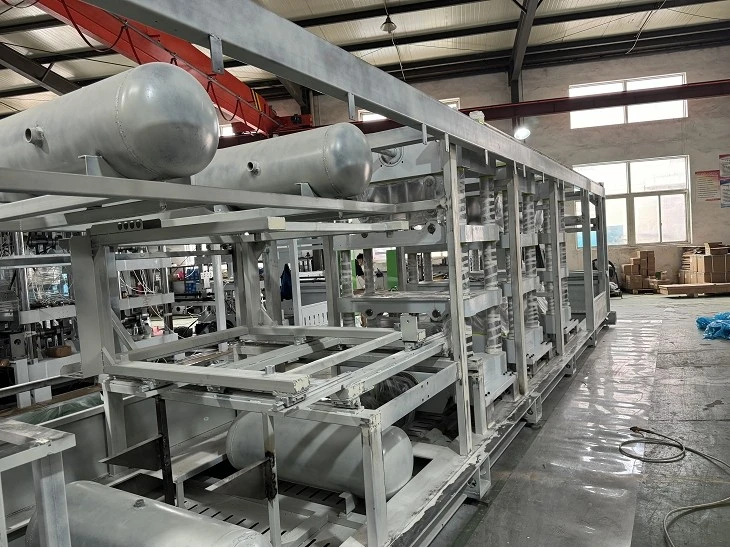
If you are interested in our 4 Station Thermoforming Machines or have any questions about remote control capabilities, please feel free to contact us for further discussion and potential procurement. We look forward to working with you to enhance your manufacturing processes.
References
- "Industrial Internet of Things: Challenges, Opportunities, and Directions" by Li Da Xu, Wook Hyun Kim, and Deokjai Choi
- "Internet of Things: A Survey" by Luigi Atzori, Antonio Iera, and Giacomo Morabito
- "Thermoforming Technology Handbook" by James L. Throne


