


As a dedicated supplier of PP Glass Machines, I often encounter inquiries from clients regarding the quality and finish of the products these machines can produce. One of the most common questions is whether a PP Glass Machine can produce products with a smooth inner surface. In this blog post, I will delve into this topic, exploring the technical aspects, factors influencing the inner surface smoothness, and the capabilities of our PP Glass Machines.
Technical Principles of PP Glass Machines
PP (Polypropylene) is a widely used thermoplastic polymer known for its excellent chemical resistance, high melting point, and good mechanical properties. PP Glass Machines are designed to process PP materials into various glass - like products, such as disposable cups, food containers, and more. These machines typically use thermoforming technology, which involves heating a thermoplastic sheet until it becomes pliable and then forming it into the desired shape using a mold.
The thermoforming process in a PP Glass Machine consists of several key steps. First, the PP sheet is fed into the machine and heated to a specific temperature. The heating system must ensure uniform temperature distribution across the sheet to prevent uneven stretching and deformation during the forming process. Once the sheet reaches the appropriate temperature, it is transferred to the mold, where a vacuum or pressure is applied to force the sheet to conform to the mold's shape. After the forming process, the product is cooled and trimmed to its final dimensions.
Factors Affecting the Inner Surface Smoothness
Several factors can influence the smoothness of the inner surface of products produced by a PP Glass Machine.
Material Quality
The quality of the PP material used is crucial. High - quality PP resins with consistent molecular weight and low impurity levels are more likely to produce products with a smooth inner surface. Impurities in the material can cause surface defects, such as pits or bumps, during the forming process. Additionally, the moisture content in the PP material can also affect the surface finish. Excessive moisture can lead to the formation of bubbles or voids in the product, resulting in an uneven inner surface.
Machine Settings
Proper machine settings are essential for achieving a smooth inner surface. The heating temperature, heating time, forming pressure, and cooling rate all play important roles. If the heating temperature is too low, the PP sheet may not be pliable enough to form a smooth surface in the mold. On the other hand, if the temperature is too high, the material may degrade, leading to surface roughness. The forming pressure must be carefully controlled to ensure that the sheet fully conforms to the mold without causing excessive stretching or wrinkling. The cooling rate also affects the surface finish. Rapid cooling can cause internal stresses in the product, which may result in surface irregularities.
Mold Design and Condition
The design and condition of the mold are critical factors. A well - designed mold with a smooth inner surface will transfer its smoothness to the product. The mold should have proper venting to allow air to escape during the forming process, preventing the formation of air pockets that can cause surface defects. Regular maintenance of the mold is also necessary to ensure its surface remains smooth. Over time, the mold may wear or become contaminated, which can affect the quality of the product's inner surface.

Capabilities of Our PP Glass Machines
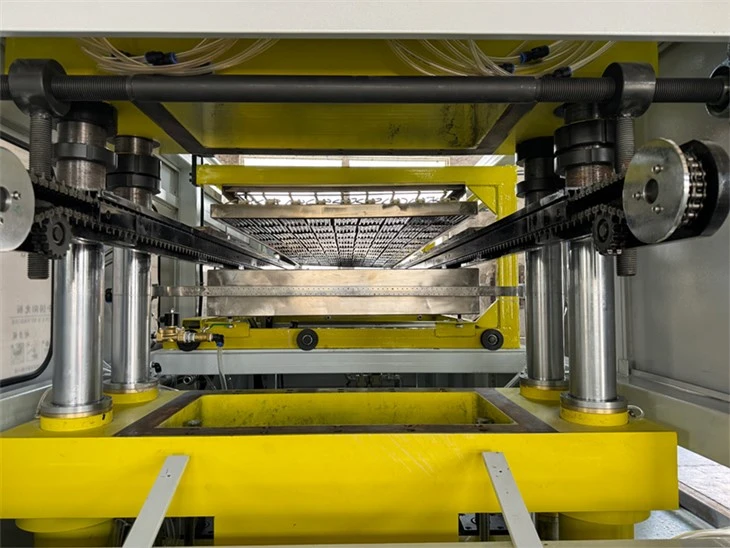
Our company's PP Glass Machines are engineered to produce products with a high - quality, smooth inner surface. We use advanced heating systems that ensure uniform temperature distribution across the PP sheet, minimizing the risk of uneven heating and surface defects. Our machines are equipped with precise pressure control systems that can accurately adjust the forming pressure according to the specific requirements of the product.
In addition, we pay great attention to mold design and manufacturing. Our molds are made from high - quality materials and are precision - machined to have a smooth inner surface. We also have a strict mold maintenance program to ensure that the molds are always in optimal condition.
We have conducted numerous tests and quality control checks on the products produced by our PP Glass Machines. The results show that our machines can consistently produce products with a smooth inner surface that meets or exceeds industry standards. Whether you need to produce small - sized coffee cups or large - sized food containers, our PP Glass Machines can deliver excellent results.
Related Products and Their Applications
In addition to our PP Glass Machines, we also offer a range of related products that can complement your production line. For example, our Coffee Cup Machine is specifically designed for the production of coffee cups. It can produce cups with a smooth inner surface, ensuring a pleasant drinking experience for your customers.
Our Disposable Glass Manufacturing Machine is suitable for the production of various disposable glass - like products, such as ice - cream cups and yogurt containers. These machines can produce products with a high - quality finish, both on the inner and outer surfaces.
If you need to produce plastic lids for your products, our Plastic Lid Thermoforming Machine is an ideal choice. It can produce lids with a smooth inner surface that fits perfectly with your cups or containers.
Conclusion
In conclusion, a well - designed and properly operated PP Glass Machine can indeed produce products with a smooth inner surface. By carefully controlling factors such as material quality, machine settings, and mold design, we can ensure that the products meet the highest quality standards.
If you are interested in our PP Glass Machines or any of our related products, we invite you to contact us for more information. Our team of experts is ready to assist you in selecting the most suitable machine for your production needs and to provide you with comprehensive technical support. We look forward to the opportunity to work with you and help you achieve success in your business.
References
- Modern Plastics Encyclopedia. McGraw - Hill.
- Thermoforming Technology Handbook. Hanser Publications.


