


In the dynamic world of plastic cup production, the choice of the right machine is pivotal for manufacturers aiming to optimize efficiency, quality, and cost - effectiveness. As a trusted supplier of machines to make plastic cups, I have witnessed firsthand the diverse needs of the industry and the wide range of machines available to meet those needs. This blog post will delve into the different types of machines used in plastic cup manufacturing, highlighting their features, advantages, and applications.
Thermoforming Cup Machine
Thermoforming is one of the most popular methods for producing plastic cups. A Thermoforming Cup Machine works by heating a thermoplastic sheet until it becomes pliable. The softened sheet is then stretched over or into a mold using vacuum pressure, air pressure, or mechanical force. Once the plastic has cooled and solidified in the mold, the formed cup is trimmed from the excess material.
One of the key advantages of thermoforming cup machines is their versatility. They can produce cups in a wide range of sizes, shapes, and thicknesses. This makes them suitable for various applications, from disposable coffee cups to large - capacity food containers. Additionally, thermoforming machines are relatively fast, with high - speed models capable of producing hundreds of cups per minute.
These machines are also known for their cost - effectiveness. Thermoforming uses less raw material compared to other manufacturing processes, as the plastic sheet is formed directly into the desired shape. Moreover, the molds for thermoforming machines are generally less expensive to produce than those for injection molding machines, which is a significant advantage for small - to - medium - sized manufacturers.
Injection Molding Machine for Plastic Cups
Injection molding is another common method for making plastic cups. An injection molding machine for plastic cups works by melting plastic pellets in a heated barrel. The molten plastic is then injected under high pressure into a mold cavity. Once the plastic has cooled and solidified, the mold opens, and the finished cup is ejected.
Injection molding machines offer several benefits. First, they can produce cups with very high precision and accuracy. This is particularly important for applications where tight tolerances are required, such as medical or laboratory cups. The surface finish of injection - molded cups is also typically very smooth, which is desirable for products that come into contact with food or beverages.
Another advantage of injection molding is its ability to produce complex shapes and designs. The high pressure used in the injection process allows the plastic to fill even the most intricate mold details. However, injection molding machines are generally more expensive to purchase and operate than thermoforming machines. The molds for injection molding are also more costly, especially for large - scale production. Additionally, injection molding consumes more energy and raw material, which can increase the overall production cost.
Pp Glass Making Machine
A Pp Glass Making Machine is specifically designed to produce plastic cups made from polypropylene (PP). Polypropylene is a popular choice for plastic cups due to its excellent chemical resistance, high melting point, and good impact strength.
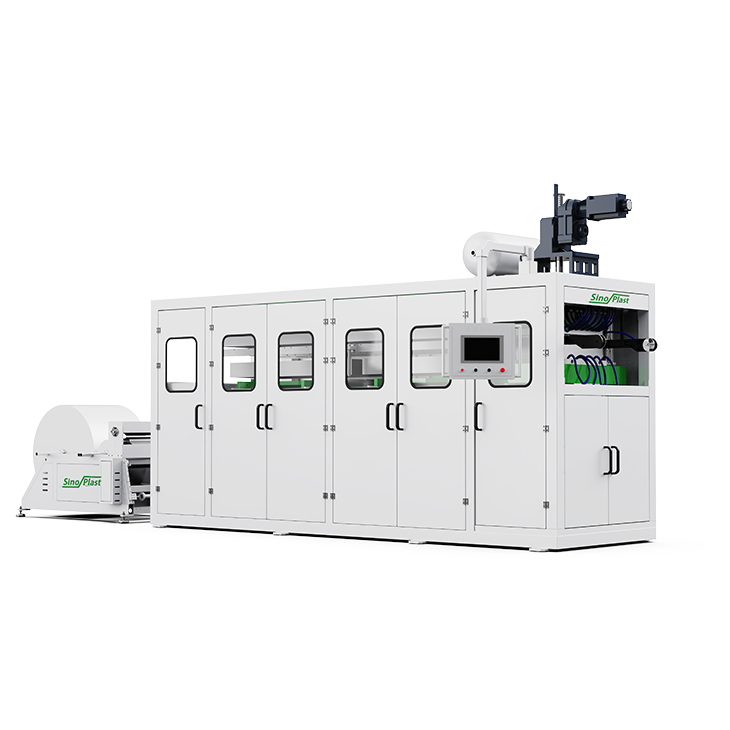

Pp glass making machines use a variety of processes, including thermoforming and injection molding, to produce PP cups. These machines are often equipped with advanced control systems to ensure consistent quality and high production efficiency. For example, they can precisely control the temperature, pressure, and speed of the manufacturing process, resulting in cups with uniform wall thickness and excellent dimensional stability.
PP cups produced by these machines are widely used in the food and beverage industry. They are suitable for hot and cold drinks, as well as for storing food. The chemical resistance of PP also makes it a safe choice for packaging products that may come into contact with acidic or alkaline substances.
Compression Molding Machine
Compression molding is a less common but still effective method for making plastic cups. A compression molding machine works by placing a pre - measured amount of plastic material, usually in the form of a pre - heated sheet or a pellet, into an open mold cavity. The mold is then closed, and pressure is applied to compress the plastic material into the shape of the mold. Heat is also applied during the process to soften the plastic and allow it to flow into the mold details.
Compression molding machines are well - suited for producing large - sized plastic cups or cups with thick walls. They can handle a variety of plastic materials, including thermosetting plastics, which cannot be processed by thermoforming or injection molding. Compression molding also produces less waste compared to other processes, as the exact amount of plastic required for the cup is used.
However, compression molding is generally a slower process than thermoforming or injection molding. The cycle time for compression molding can be longer, which may limit the production rate. Additionally, the molds for compression molding machines are more complex and expensive to produce, which can be a drawback for some manufacturers.
Blowing Molding Machine for Plastic Cups
Blowing molding is mainly used for producing plastic bottles, but it can also be adapted for making certain types of plastic cups. A blowing molding machine for plastic cups works by first creating a parison, which is a tube - shaped piece of molten plastic. The parison is then placed inside a mold cavity, and compressed air is blown into it, causing the plastic to expand and take the shape of the mold.
Blowing molding machines are suitable for producing cups with a hollow or thin - walled design. They can produce cups with a seamless construction, which is beneficial for applications where leakage prevention is crucial. Blowing molding also allows for the production of cups with unique shapes, such as oval or irregularly - shaped cups.
However, blowing molding machines have some limitations. They are generally less precise than injection molding or thermoforming machines, and the wall thickness of the cups may be less uniform. Additionally, the production speed of blowing molding machines for cups is often lower compared to other types of plastic cup manufacturing machines.
Factors to Consider When Choosing a Plastic Cup Making Machine
When choosing a machine to make plastic cups, several factors should be considered. First, the type of plastic material to be used is crucial. Different machines are designed to work with specific types of plastics, such as polypropylene, polyethylene, or polystyrene. The properties of the plastic, such as its melting point, viscosity, and chemical resistance, will determine which machine is most suitable.
The production volume is another important factor. For high - volume production, high - speed machines like thermoforming or injection molding machines may be the best choice. On the other hand, for low - volume or custom - made production, a compression molding or a slower - speed thermoforming machine may be more appropriate.
The desired cup design and quality also play a role in machine selection. If high precision and a smooth surface finish are required, injection molding may be the best option. For complex shapes or large - sized cups, thermoforming or compression molding machines may be more suitable.
Cost is, of course, a significant consideration. This includes not only the initial purchase price of the machine but also the cost of operation, maintenance, and mold production. Manufacturers should carefully evaluate their budget and long - term production plans before making a decision.
Conclusion
As a supplier of machines to make plastic cups, I understand the importance of choosing the right machine for your specific needs. Whether you are a small - scale producer looking for a cost - effective solution or a large - scale manufacturer in need of high - speed, high - precision equipment, there is a plastic cup making machine that is right for you.
If you are interested in learning more about our Plastic Cup Manufacturing Machine or would like to discuss your plastic cup production requirements, please feel free to contact us. Our team of experts is ready to provide you with detailed information and help you make an informed decision.
References
- "Plastic Processing Technology" by John A. Brydson
- "Handbook of Plastic Materials and Technology" edited by Irvin I. Rubin
- Industry reports on plastic cup manufacturing from leading market research firms.


