


Hey there! As a supplier of thermoforming machines, I often get asked about the cooling system of these machines. So, I thought I'd write a blog post to explain what it is, how it works, and why it's so important.
First things first, let's talk about what thermoforming is. Thermoforming is a manufacturing process where a plastic sheet is heated to a pliable forming temperature, then formed to a specific shape in a mold, and trimmed to create a usable product. It's used to make all sorts of things, from food packaging to automotive parts.
Now, let's get into the cooling system. The cooling system of a thermoforming machine is crucial because it helps to solidify the plastic sheet after it has been formed in the mold. Without proper cooling, the plastic would remain soft and malleable, making it impossible to maintain the desired shape.
There are two main types of cooling systems used in thermoforming machines: air cooling and water cooling.

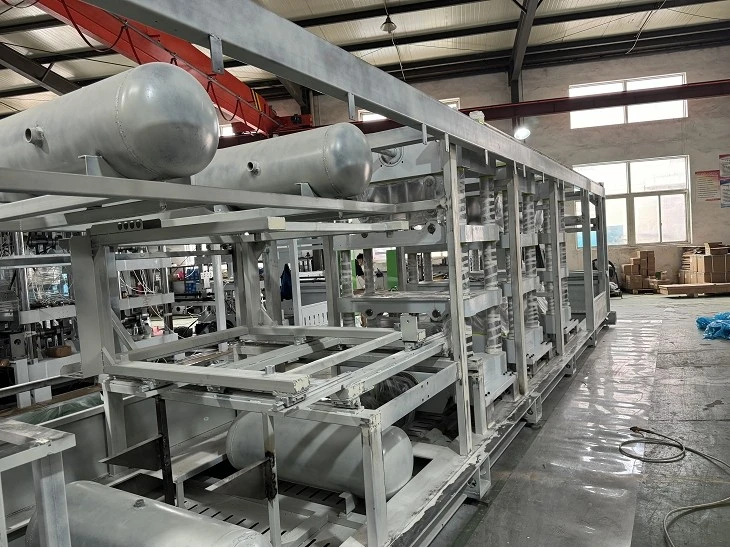
Air Cooling System
Air cooling is the simpler and more common of the two methods. It works by blowing cool air over the formed plastic sheet to remove heat. This system typically consists of a fan or a series of fans that direct air onto the plastic.
One of the advantages of air cooling is its simplicity. It doesn't require a complex plumbing system like water cooling, which means it's easier to install and maintain. It's also more energy - efficient in some cases, as it doesn't need to pump large amounts of water.
However, air cooling has its limitations. It's not as effective at removing heat as water cooling, especially for thicker plastic sheets or high - volume production. The cooling rate is slower, which can lead to longer cycle times. This means that if you're looking to produce a large number of parts quickly, air cooling might not be the best option.
Water Cooling System
Water cooling, on the other hand, is more efficient at removing heat. It works by circulating water through channels in the mold or around the formed plastic sheet. The water absorbs the heat from the plastic and then transfers it to a cooling tower or a chiller, where it's cooled down before being recirculated.
The main advantage of water cooling is its speed. It can cool the plastic much faster than air cooling, which reduces cycle times and increases production efficiency. This is especially important for high - volume manufacturing operations.
But water cooling also has its drawbacks. It's more complex and expensive to install and maintain. You need to have a reliable water source, a plumbing system, and a cooling tower or chiller. There's also a risk of water leakage, which can damage the machine and cause production delays.
Components of a Cooling System
Regardless of whether it's an air or water cooling system, there are several key components that make up the cooling system of a thermoforming machine.
Cooling Fan or Pump
In an air cooling system, the cooling fan is the heart of the operation. It's responsible for blowing air over the plastic to remove heat. In a water cooling system, a pump is used to circulate the water through the system.
Heat Exchanger
A heat exchanger is used to transfer heat from the hot plastic or water to the cooling medium (air or water). In an air cooling system, the heat exchanger is often just the surface area of the plastic itself. In a water cooling system, a more complex heat exchanger is used, such as a shell - and - tube or plate - type exchanger.
Temperature Sensor
A temperature sensor is used to monitor the temperature of the plastic or the cooling medium. This allows the machine operator to adjust the cooling system as needed to ensure that the plastic is cooled to the right temperature.
Importance of a Good Cooling System
A well - designed cooling system is essential for the proper functioning of a thermoforming machine. Here are some of the reasons why:
Product Quality
Proper cooling ensures that the plastic solidifies evenly and maintains its shape. If the cooling is uneven, the plastic can warp or develop stress cracks, which can affect the quality and functionality of the final product.
Production Efficiency
As mentioned earlier, a fast - acting cooling system can reduce cycle times, which means you can produce more parts in less time. This can increase your overall production efficiency and profitability.
Machine Longevity
A good cooling system helps to prevent overheating of the machine components. Overheating can cause damage to the motor, bearings, and other parts, which can lead to costly repairs and downtime.
Our Thermoforming Machines and Cooling Systems
At our company, we offer a range of thermoforming machines, including Pp Thermoforming Machine, Plastic Plate Machine, and Plastic Lid Making Machine. Each of our machines is equipped with a high - performance cooling system that is designed to meet the specific needs of the application.
We understand that different customers have different requirements, so we offer both air and water cooling options. Our team of experts can help you choose the right machine and cooling system for your production needs.
If you're in the market for a thermoforming machine and want to learn more about our products and cooling systems, we'd love to hear from you. Whether you're a small - scale producer or a large - scale manufacturer, we have the solution for you. Contact us today to start a discussion about your thermoforming needs and how we can help you achieve your production goals.
References
- Smith, J. (2020). Thermoforming Technology Handbook. New York: Industrial Press.
- Johnson, A. (2019). Cooling Systems in Plastic Manufacturing. Journal of Plastic Processing, 25(3), 123 - 135.


